
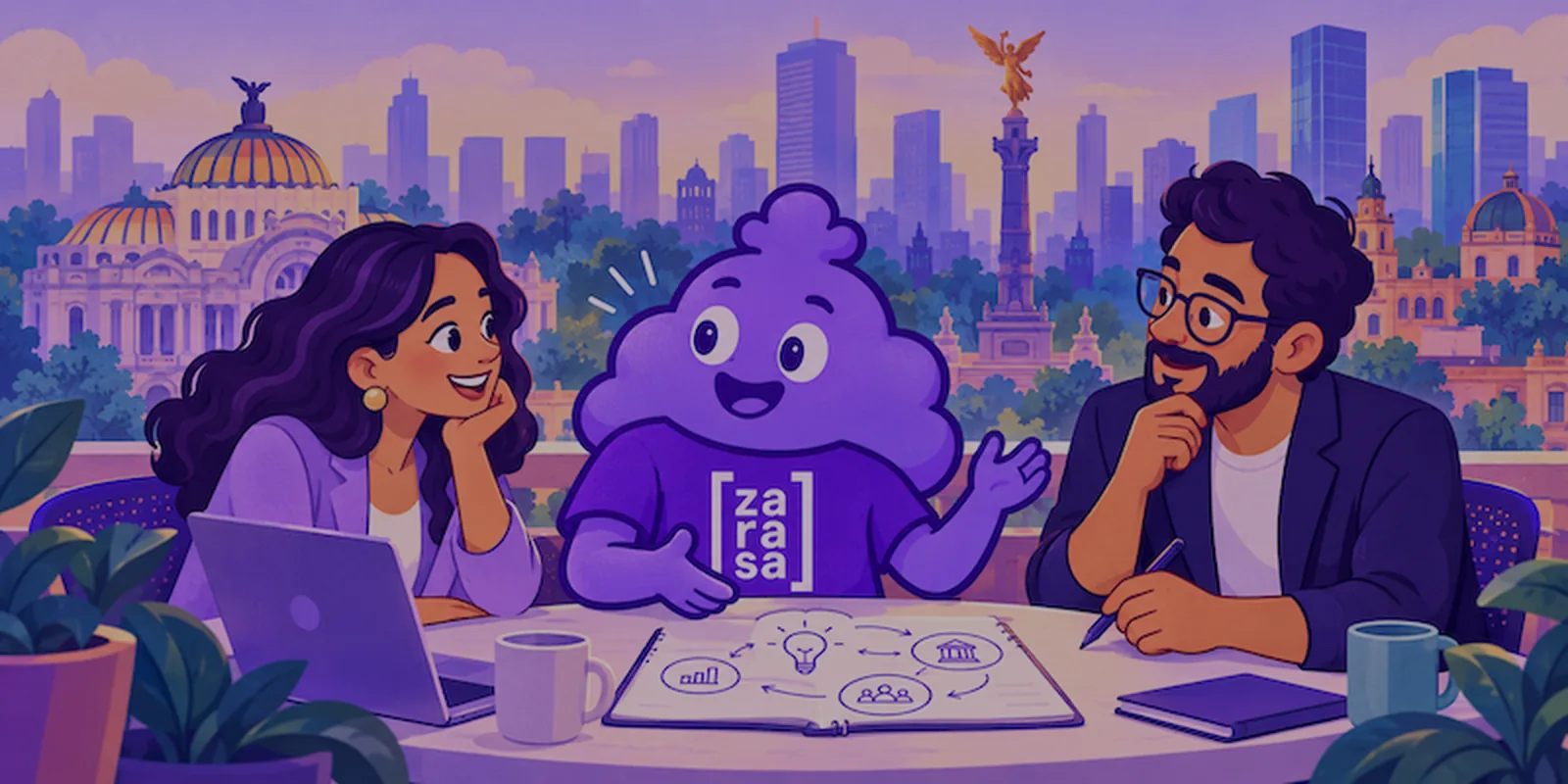

A week in Mexico
I recently took part in a trade mission to Mexico with around 20 founders and executives from companies in Brazil, the United States, Uruguay, Argentina and Chile. The goal was to get a first-hand look at the Mexican market and talk directly with the people who make the decisions.
The mission focused on the fintech sector. Almost every meeting was with operations leaders at fintechs and banks, and the same topics kept coming up: back office, payment gateways, crypto, regulation, and how to enter a demanding market.
I came back with plenty of ideas. In this article I share the ones I think can help any company in the region that is considering expanding into Mexico.
In Mexico, business is built on trust
The clearest lesson of the trip was that in Mexico relationships weigh as much as the technical proposal. I heard it in almost every meeting.
Showing up matters. Even though much of the day-to-day work is remote, decision makers value that you travel, sit at the table and get to know them. This is especially true at the start of a business relationship.
Large companies work with trusted vendors. Many organizations keep stable vendor lists that last for years. Getting onto those lists takes time, and it does not happen with a first cold contact.
Referrals open doors. Most of the people I spoke with prefer to work with companies recommended by someone they trust. For a newcomer, building local partnerships and taking care of every relationship is the best way to start.
A fintech ecosystem that never stops innovating
The Mexican fintech ecosystem is large, dynamic and highly competitive. The entities supervised by the National Banking and Securities Commission alone number more than 5,000 (CNBV register of supervised entities), which gives a sense of the market's size.
The profile of many of the companies I met stood out. Several are spin-offs or digital arms of regional banks, with teams of more than 50 people. They build their own solutions, are very active in innovation and are constantly looking for new challenges.
It was also clear that the regulatory context shapes many technology decisions:
- Data residency: the banking sector restricts storing information in clouds outside the country, something any cloud solutions provider must take into account.
- Personal data protection: a priority for Mexican organizations. Vendors must be able to offer real guarantees about how they handle information.
- Quality and sustainability: the most modern organizations increasingly value their vendors' quality certifications and environmental commitments.
Three trends we brought home
1. Loyalty programs. Several people mentioned loyalty programs currently under construction. Companies want to know their customers better and reward long-term relationships.
2. From descriptive to predictive data. Many organizations already measure what happens: volumes, percentages, consumption. The next step is anticipating it, with predictive analytics that help make better decisions before events occur.
3. Beyond the traditional CRM. In several conversations the idea came up that CRM as we know it will change a great deal in the coming years. Salesforce is no longer just a CRM: it is a platform that brings together data, artificial intelligence, analytics and collaboration. The value lies in how those pieces combine to solve concrete business problems.
What it means for Zarasa
This mission confirmed that Mexico is a market of enormous opportunity for those who arrive with patience, closeness and a clear value proposition. It also left us homework: to keep strengthening our partnerships and the relationships we began building on this trip.
Our commitment is to support companies across the region with high-quality Salesforce implementations in Mexico, solutions that solve real problems, and a close relationship built on trust. For the financial sector in particular, we work on Financial Services Cloud, with data residency and data protection as part of the design from day one.
My thanks to the mission organizers and to every company that opened its doors to us. We look forward to continuing the conversation, and we will see you at the next Fintech México Week, on February 25, 2027.
Frequently asked questions
What is a trade mission and what is it for?
It is an organized trip in which founders and executives from several companies visit a market to meet decision makers. This mission to Mexico brought together around 20 companies from Brazil, the United States, Uruguay, Argentina and Chile, and the meetings were with operations leaders at fintechs and banks.
How do you start doing business with fintechs and banks in Mexico?
By showing up and through referrals. Decision makers value a vendor who travels and meets them in person, large companies work with stable vendor lists that last for years, and most prefer companies recommended by someone they trust. Local partnerships are the shortest path.
What regulatory constraints should a technology vendor consider in Mexico?
Two above all: data residency, since the banking sector restricts storing information in clouds outside the country, and personal data protection, which is a priority for Mexican organizations. Quality certifications and environmental commitments carry growing weight.
What technology trends are Mexican fintechs following?
Three came up repeatedly: loyalty programs under construction, the move from descriptive to predictive analytics, and a CRM that stops being only a CRM and becomes a platform integrating data, artificial intelligence, analytics and collaboration.
When is the next Fintech México Week?
February 25, 2027. Zarasa plans to be there to continue the conversations that started on this mission.