
Any given Monday
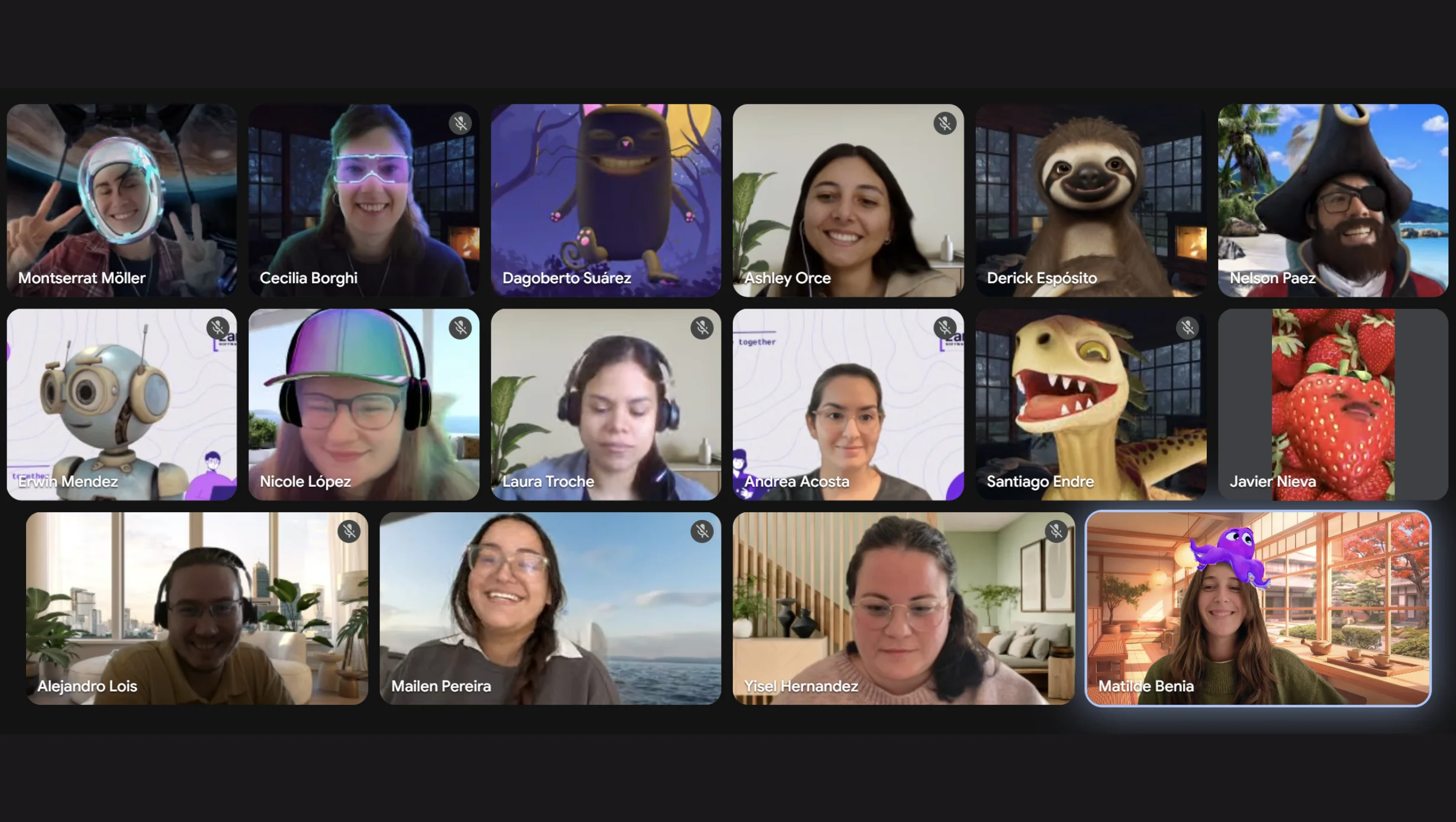
On a Zarasa video call on any given Monday, you might find someone connected from Punta del Este, someone from Toronto, someone from Buenos Aires and someone from Panama City. Different accents, different lunch hours, different ways of saying hello. And yet, everyone speaking the same language when it comes to how a Salesforce project gets done at Zarasa.
This is no accident. It is one of the most important cultural decisions we made as a company: not to build a homogeneous team, but a diverse one, with people who came from different places and different paths — and to make that diversity a competitive advantage rather than an obstacle.
Operating in more than ten countries forces you to listen differently
Today we work in Mexico, Guatemala, El Salvador, Costa Rica, Panama, Colombia, Argentina, Uruguay, Paraguay, Puerto Rico, the Dominican Republic and the United States. That means the same Salesforce project can carry different nuances depending on whether the client is a retail company in Guatemala or a financial services firm in Uruguay. The way people speak, the pace of decisions, even the sense of humor changes from one country to another.
A multicultural team is not just "people from different countries on an org chart". It is the ability to understand those nuances without anyone having to explain them, because someone on the team has lived them. When we hire, we actively look for that variety of backgrounds, because we know every different perspective adds something a homogeneous team simply cannot see.
Remote, hybrid and on-site: no single recipe
We do not believe there is one correct way to work. That is why fully remote, hybrid and on-site schemes coexist at Zarasa.
What we do hold firmly are the meeting points: monthly team meetings so nobody loses the pulse of what is happening, and an annual in-person gathering whose explicit goal is to disconnect and enjoy a relaxed setting — not to talk about work. Because a remote team that never sees each other's faces ends up being a group of strangers sharing a Slack channel.
The roles, and why every one matters equally
Behind every Salesforce project there are far more people than the client sees in meetings. There are those who run the initial strategic diagnosis, those who configure and build on the platform, those who design the end-user experience, those who support adoption and train the client's team, and those who sustain technical support after delivery.
At Zarasa we deliberately avoid the model where a salesperson sells and an unknown third party implements. The person who diagnoses your problem is, very often, the same one who later sits down to configure the solution. That continuity of people is also continuity of knowledge: nobody has to start from scratch explaining their business a second time.
Diversity as a working method, not a slogan
We do not talk about diversity and inclusion as a phrase for a LinkedIn plaque. We measure it: we run internal surveys and use that data to know whether the policies we implement (parental leave, flexible hours, half-day schemes) are actually working for the people who need them.
A team that absorbs people from very different paths, that connects one country with another without forgetting there is someone with their own story on the other side, is a team that understands its clients better — because clients are people before they are companies. That is, at its core, Zarasa's cultural bet: that geographic distance is never an excuse for human distance.
Frequently asked questions
In how many countries does Zarasa work?
Twelve: Mexico, Guatemala, El Salvador, Costa Rica, Panama, Colombia, Argentina, Uruguay, Paraguay, Puerto Rico, the Dominican Republic and the United States. The same Salesforce project can carry different nuances depending on which of them the client is in.
Does Zarasa work remotely, hybrid or on-site?
All three coexist, because we do not believe there is one correct way to work. What we do hold firmly are the meeting points: monthly team meetings so nobody loses the pulse of what is happening, and an annual in-person gathering.
Who works on a Salesforce project besides the people the client sees?
Behind every project there are those who run the initial strategic diagnosis, those who configure and build on the platform, those who design the end-user experience, and those who support adoption and train the client's team.
How does Zarasa handle diversity?
We measure it. We run internal surveys and use that data to know whether the policies we implement, such as parental leave, flexible hours and half-day schemes, are actually working for the people who need them.
Want a partner that understands your market?
A team distributed across the region, with your country's culture at the table. Free 45-minute assessment.
Book a free assessment →